Outer Hebrides Top Ten Photography Locations
Seascape Photography locations Outer Hebrides
Based in the Outer Hebrides for more than two years and out with my camera on a regular basis, with no particular order, I’ve put together a shortlist of my favourite locations across the islands. For each spot I’ll explain why I love it, the best time of year to visit, and how different light and weather conditions affect the images you can create.
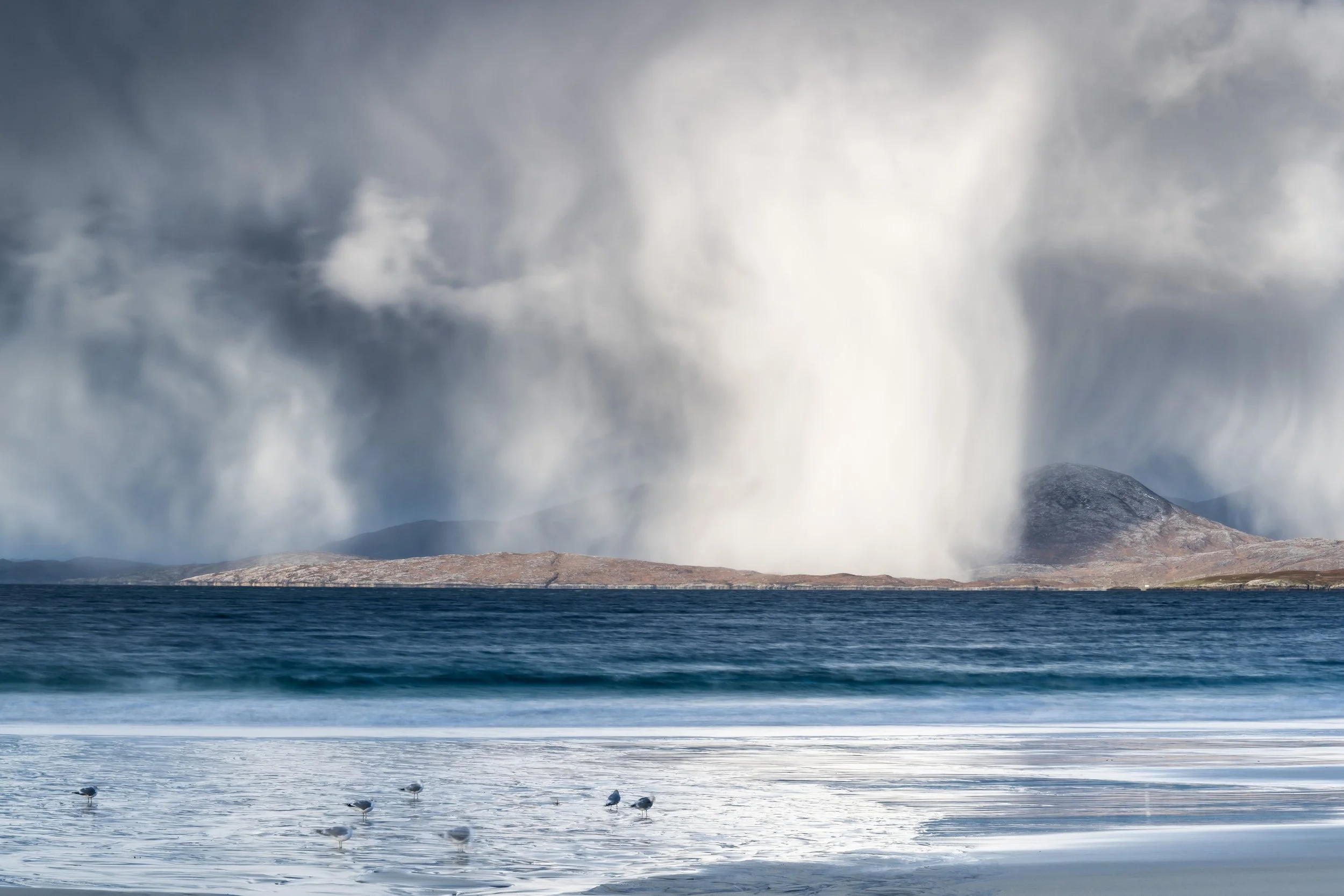
Luskentyre Beach, Isle of Harris, Outer Hebrides
Luskentyre Beach, Isle of Harris
Luskentyre Beach is rightly celebrated worldwide for its beauty. Its long, sweeping sands and clear turquoise waters sit beneath the dramatic backdrop of the Harris hills, creating scenes that never fail to inspire. No matter how many times we return with cameras, the beach always offers something fresh to photograph.
One of the most striking features is the ever-changing sand patterns carved by a river as it winds across the shore toward the sea. These rivulets and channels provide compelling foreground interest that naturally leads the eye toward the mountains, and they also create opportunities for striking abstract compositions.
Depending on how wild the waves are, you can choose to freeze the action with a fast shutter or introduce motion blur by slowing the shutter — the creative choice is yours. With the Harris Hills or Taransay as a dramatic backdrop, or the sweeping sand dunes nearby, there are also excellent opportunities for intentional camera movement (ICM) photography. I’d highly recommend taking a set of ND filters with you and enjoy some long exposure photography.
I prefer photographing Luskentyre Beach in autumn or winter, it’s my personal choice. The season brings mood, drama and atmosphere: vast, dramatic skies and storms are what draw me in.
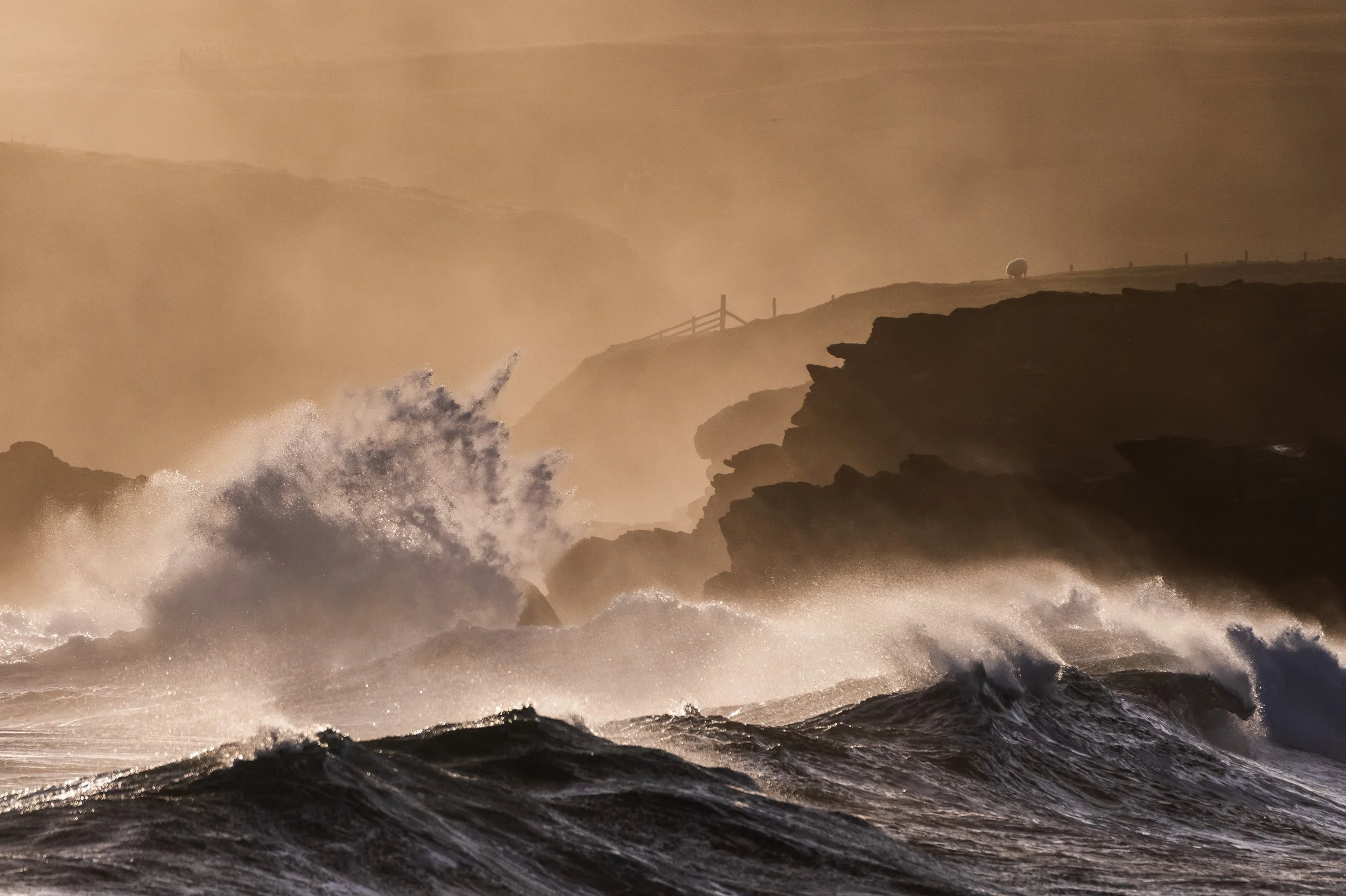
Port of Ness, Isle of Lewis Outer hebrides
Port of Ness Isle of Lewis Outer Hebrdies
Port of Ness, Isle of Lewis.
There is so much to photograph here. Take a walk along the beach toward the sea stacks and you’ll find a wealth of subjects: abstract rock textures, the stacks themselves, and dramatic rocky foregrounds. Large waves often roll in, so take care, especially on an incoming tide—to avoid getting caught out. Wave photography is a passion of mine, and the beach is an excellent place to capture close-up detail; I recommend using a telephoto lens for dynamic, tightly framed shots.
Photographed from the carpark at sunrise, I captured the cliffs as huge waves rolled and crashed into shore. Winter is my favourite season for shooting Port of Ness and any time a storm passes over the island. Always check tides and wind direction for safety. The harbour wall is another excellent vantage for dramatic, spectacular waves.
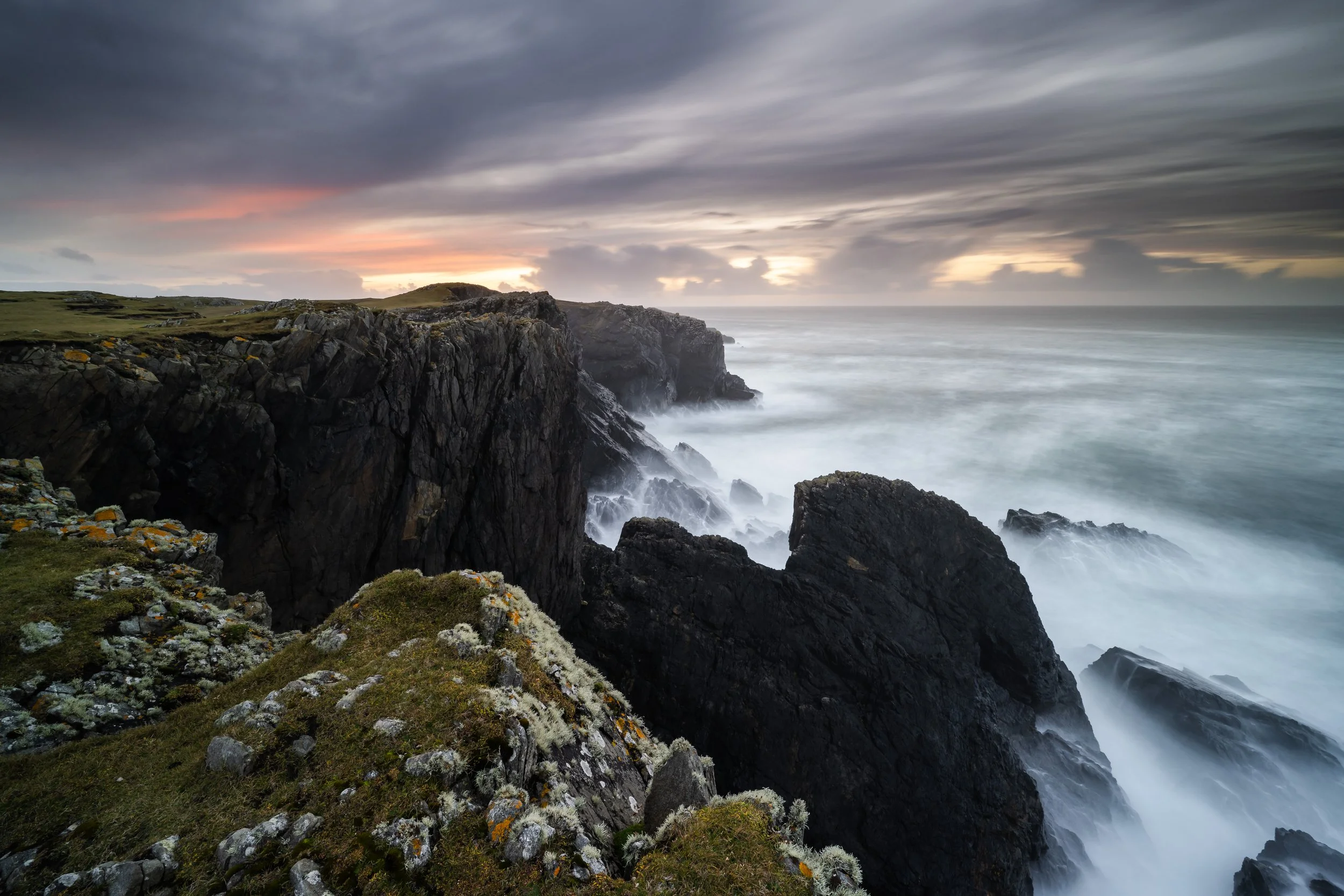
Butt Of lewis, Outer Hebrides
Butt Of Lewis, Isle of Lewis
One of my absolute favorite places to photograph on the Isle of Lewis. You are spoilt for choice with what to photograph here. Firstly you have the lighthouse which makes for a great subject.
Just around the lighthouse, after rainfall, you can create striking reflection images in small pools of water. Look for puddles that capture both the lighthouse and the sky; low angles and a wide aperture will emphasise the reflection while keeping foreground detail crisp. Use a tripod and a remote release to ensure sharpness, and try polarising filters to control glare, remove or rotate the filter to enhance reflections as needed. Alternatively, head out onto the cliffs and shoot the lighthouse with amazing rocky foreground. I enjoy to head out onto the cliffs and find rugged compositions that look out to sea. There is so much opportunity to create a unique image here., again i would recommend using ND filters for long exposure photography.
You can also walk to Eoropie, taking in the stunning coastal views along the way.
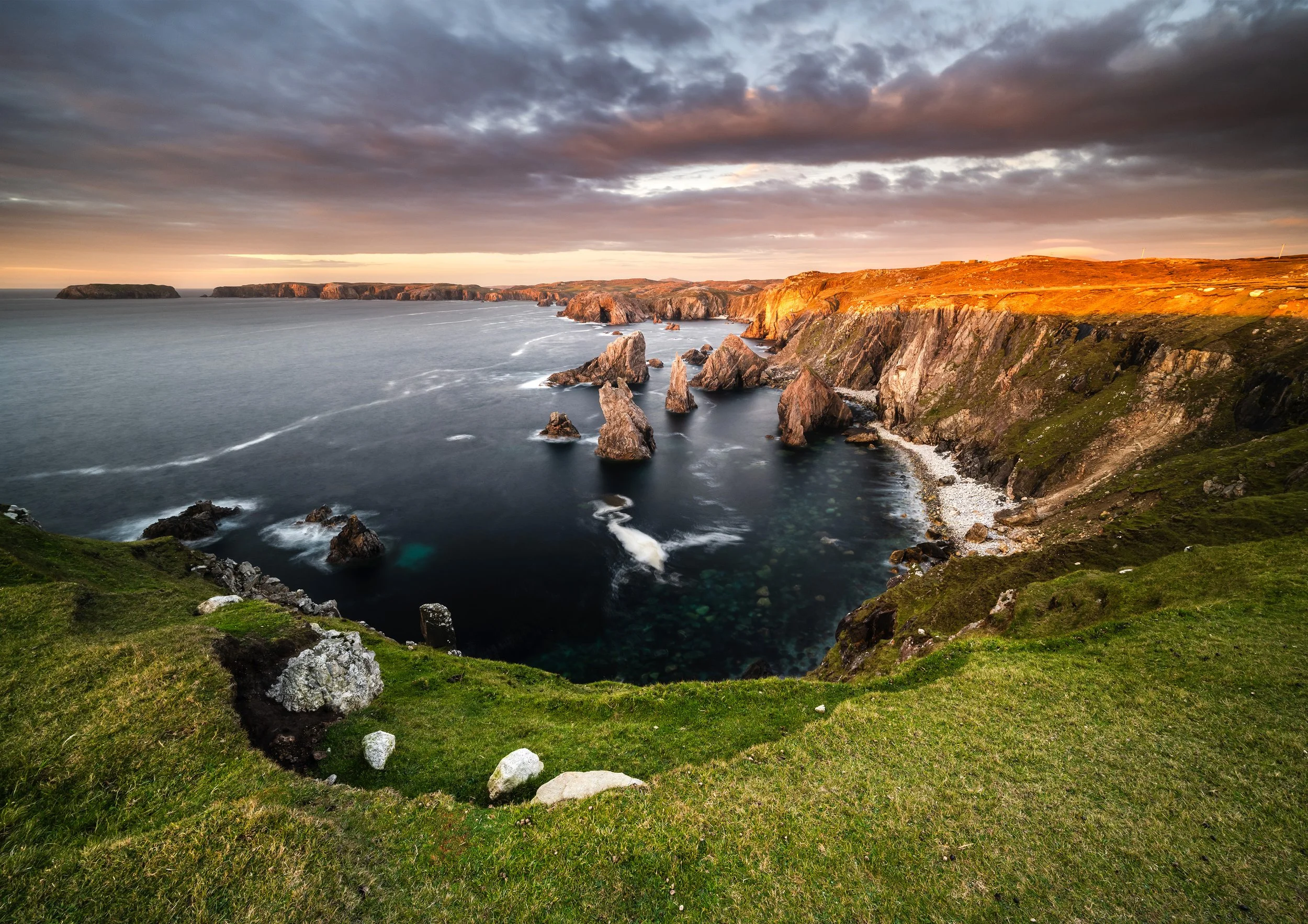
Mangersta Sea Stacks Isle of Lewis
Mangersta Sea Stacks, Isle of Lewis
Mangersta Sea Stacks on the west coast of the Isle of Lewis is a superb location for long-exposure seascape photography. Walk out toward the stacks and you’re met with an unforgettable view of these wild Atlantic formations. The best times of year for great light are April and May, and again in September. If you’re fortunate enough to have a break on the horizon or dramatic cloud cover, you’ll be treated to a stunning Hebridean sky. Take care on the cliff tops
Small Beach, Isle of Harris Outer Hebrides
Small Beach, Isle of Harris Outer Hebrdies
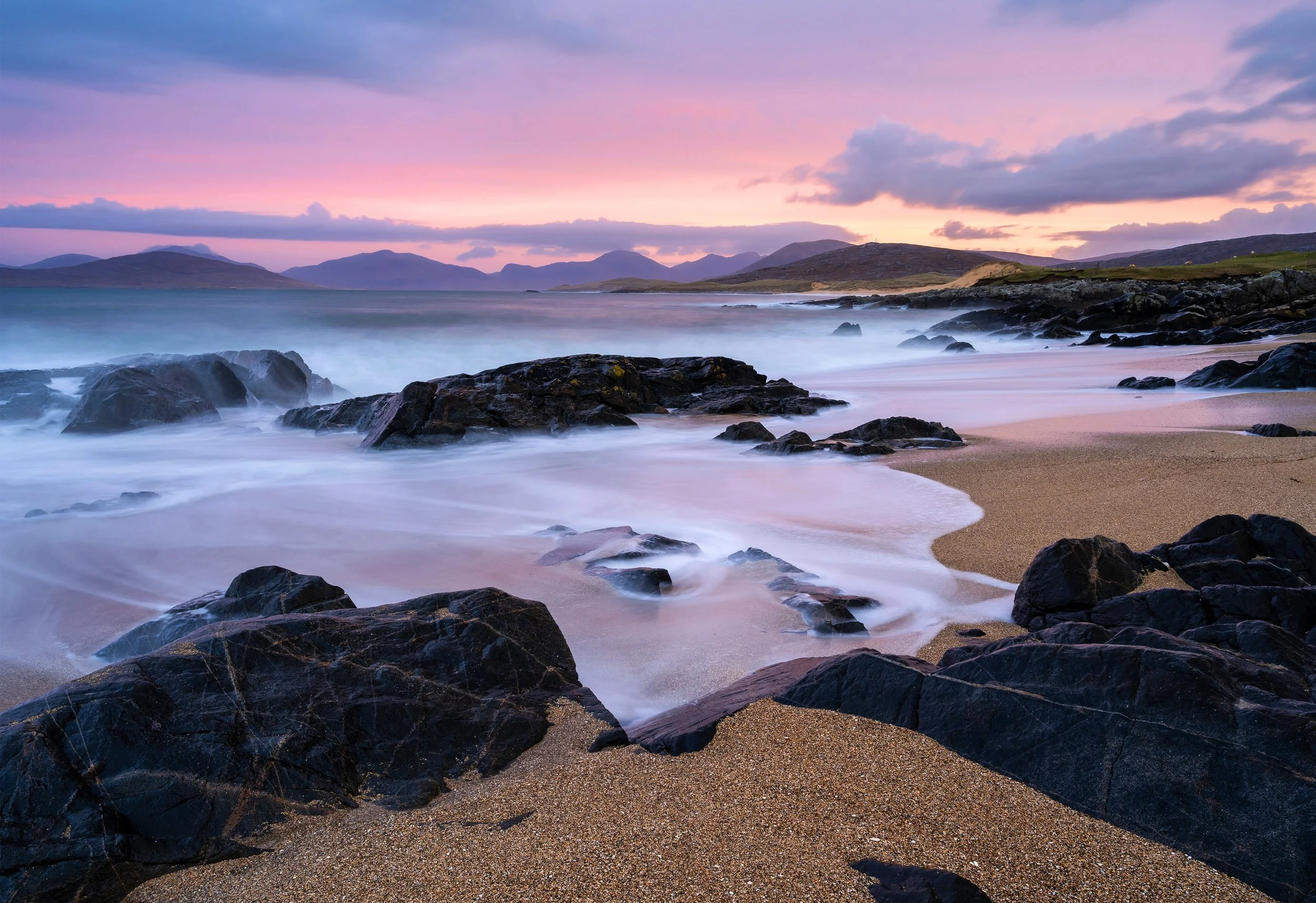
This small beach on the Isle of Harris—affectionately known as the “wee beach”—punches well above its weight for seascape photography. I made this image at a winter sunrise when soft pink hues tinted the morning sky, but honestly it rewards visits in any season.
High tide often gives the best results: the incoming water wraps around the rugged foreground rocks, creating beautiful patterns that lend themselves to long exposures. Before committing to a composition, spend at least 20 minutes watching how the tide behaves — the rhythm of the waves will tell you where the interesting movement and safe spots are. I’ve learned that lesson the hard way; more than once a sudden surge has washed over my wellies. Always put safety first.
Mealasta Beach Isle of Lewis
Mealasta Beach Isle of Lewis
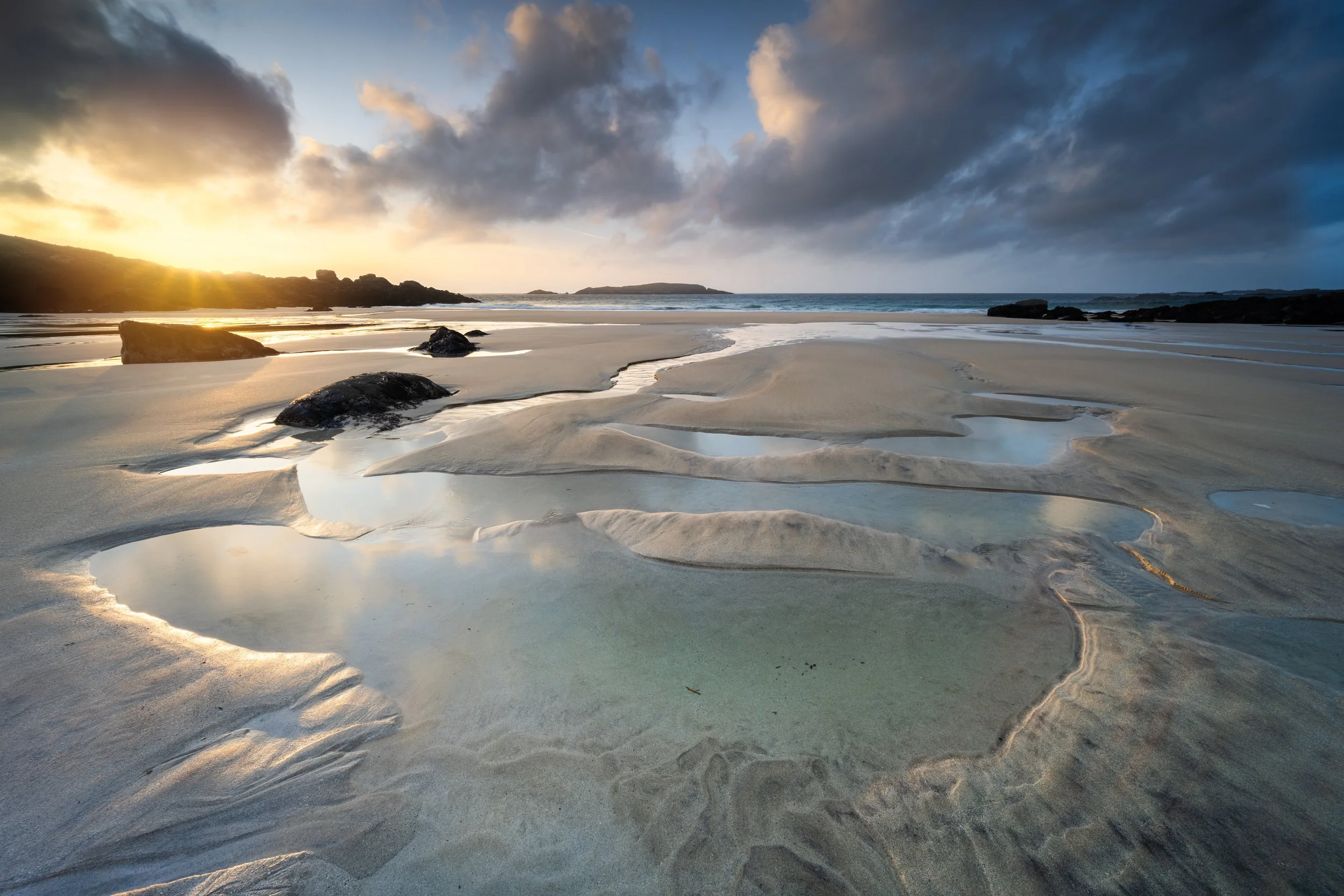
Probably one of the lesser photographed beaches on the Isle of Harris & Lewis, this west‑facing shore is a superb sunset location. If, like me, you’re not keen on early sunrises, it’s the perfect spot to enjoy warm golden light and dramatic skies without the early alarm. Best photographed at low tide in my opinion as this provides opportunities to create some foreground interest with pools of water reflecting the sky, rocky foreground, sand patterns etc The sun sets here during the winter months providing soft low winter light. High tide and storms can provide huge waves here with lots more to photograph by taking a short walk around the cliffs.
Seilebost Beach, Isle of Harris Outer Hebrdies
Seilebost Beach Isle of Harris
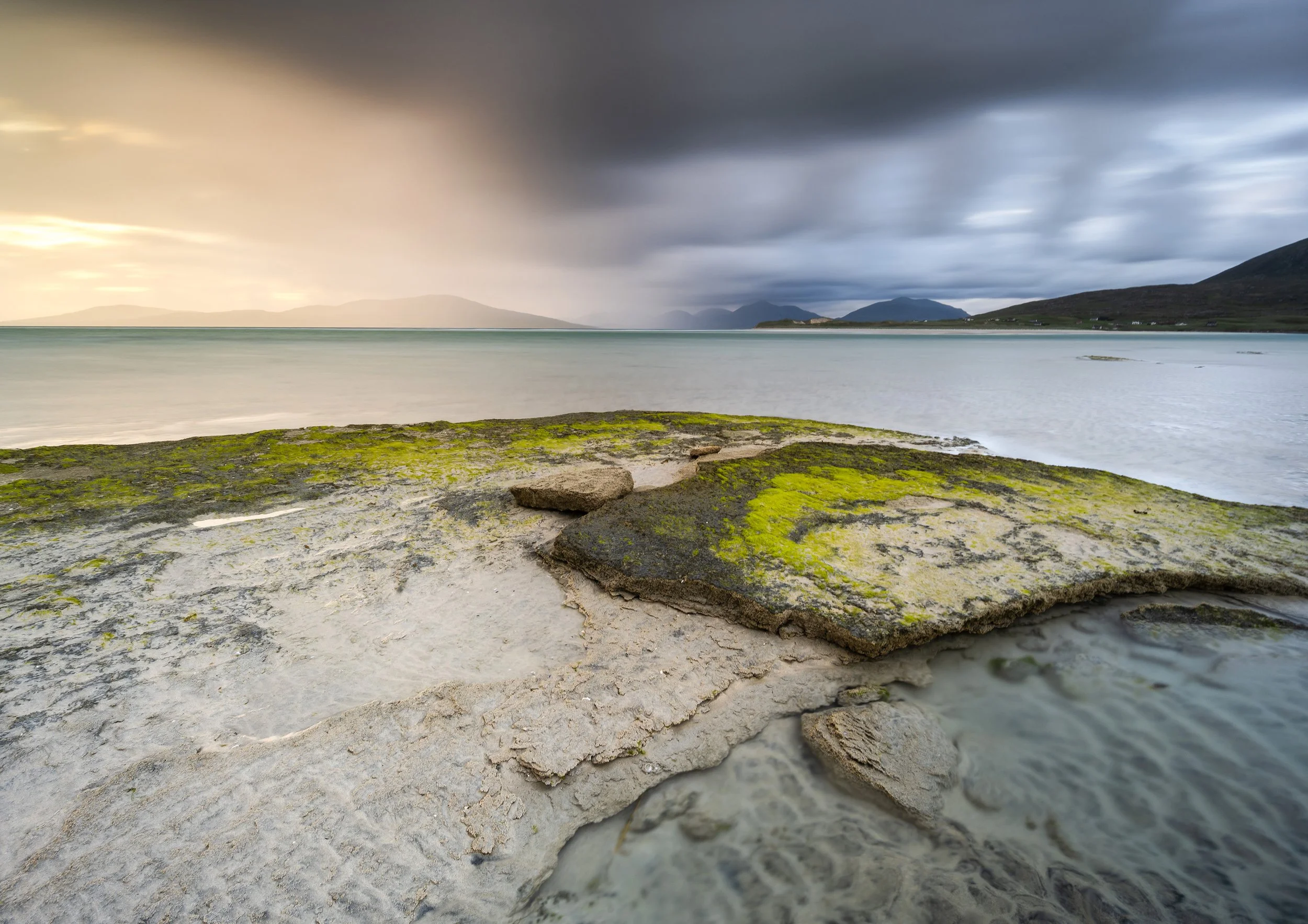
Probably my favorite beach to photograph on Harris. That may surprise some as Luskentyre and Scarista often top other photographers’ lists, but I love the extra foreground interest here. At low tide sand shelves are revealed, some etched with beautiful patterns, others dusted with green algae, offering rich textures and compositional possibilities.
The photographic opportunities are vast. You can work the sand dunes, or head up toward the channel of water that runs onto the beach, one of the best places I’ve found for striking sand patterns.
I love the drama of a passing storm. Taken just after heavy rain, the easing shower allowed the setting sun to cut through, bathing the scene in warm and cool contrast. Wet surfaces hold the storm’s memory while low light sculpts texture and atmosphere, creating a dramatic moment. of warmth and cooler tomes in the image.
For me best visited on an outgoing tide, follow the tide out to see what foreground interest sparks your creativity, great for photography all year round,
Callanish Standing Stones, Isle of Lewis
Callanish Standing Stones
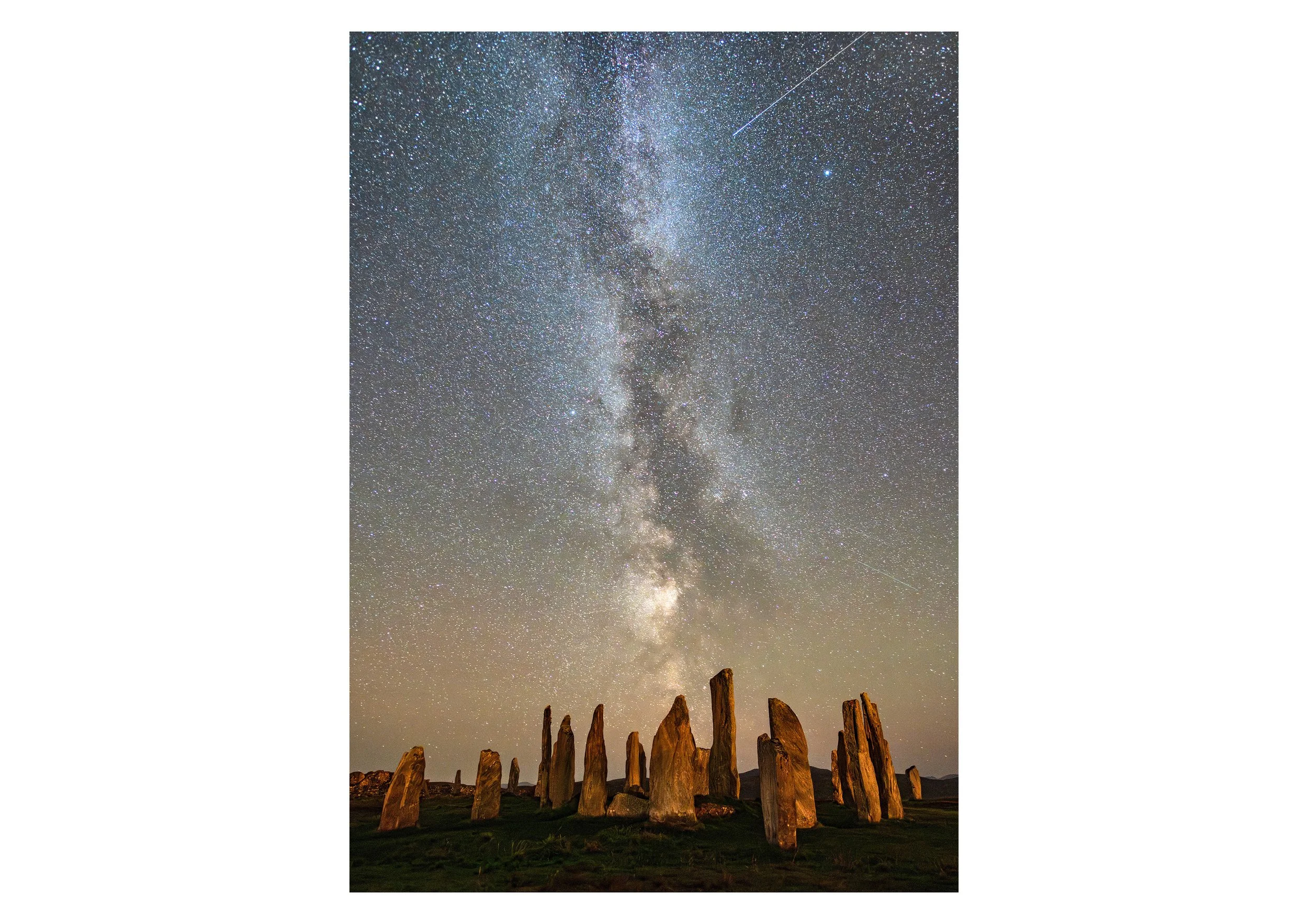
Callanish Standing Stones are magnificent over 5,000 years old and still standing tall and proud. They remain an integral part of the island’s history & tourism.
The Callanish standing stones—weathered silhouettes against sky and sea. Aligned with the moon, they have a quiet, ancient feel: stones smoothed by wind and salt, throwing long shadows over the bog. At dawn and dusk they’re like a slow conversation between land and light, a timeless draw for photographers after texture, mood and a real sense of place.
Strange as it may sound, I don’t often photograph the stones. When I do, it’s to create something a little different. I’m more drawn to astrophotography — the Milky Way, the Northern Lights and other celestial displays. Winter is a fantastic time for this work: the Milky Way sits high in the sky, and on a clear night you might even catch shooting stars or a meteor shower.
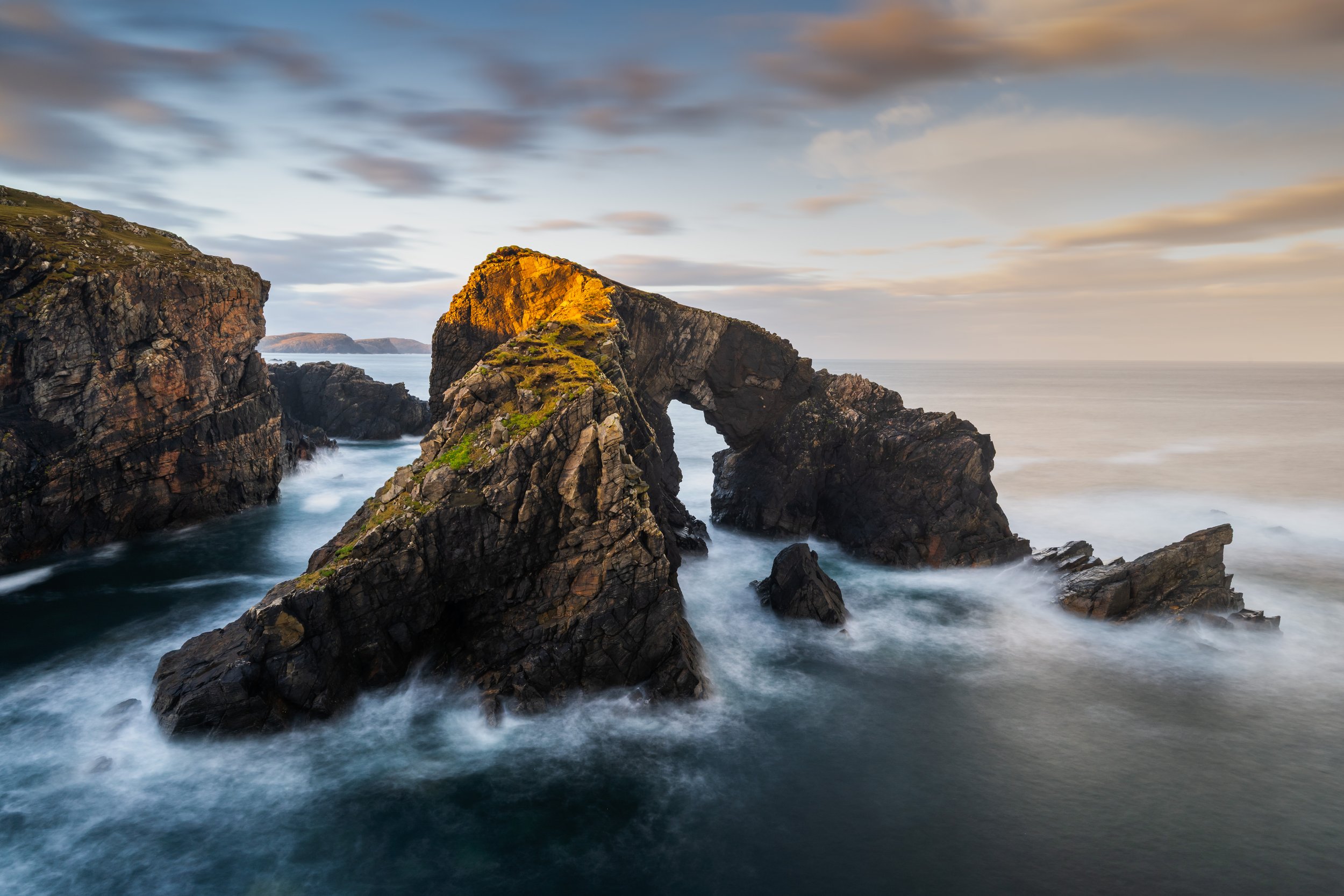
Stac A’ Phris Isle of Lewis Outer Hebrides
Stac A’ Phris Isle of Lewis Outer Hebrides
Stac A’ Phris, a sea arch on the west coast of the Isle of Lewis, is an excellent location for seascape photography. The arch is striking, rising dramatically against the rugged cliff backdrop. Again there are so many different vantage points to photograph the sea arch but can be challenging if you don’t like heights.
Plenty of opportunities to include compelling foreground interest, or to focus solely on the sea arch itself.
Best photographed on a high tide to create interesting texture around the base of the arch. The sun sets here during the summer months, casting beautiful, warm light across the rock and out to sea. I would recommend taking a set of ND filters and enjoy some long exposure photography. Take care here it can be dangerous in the wrong conditions.
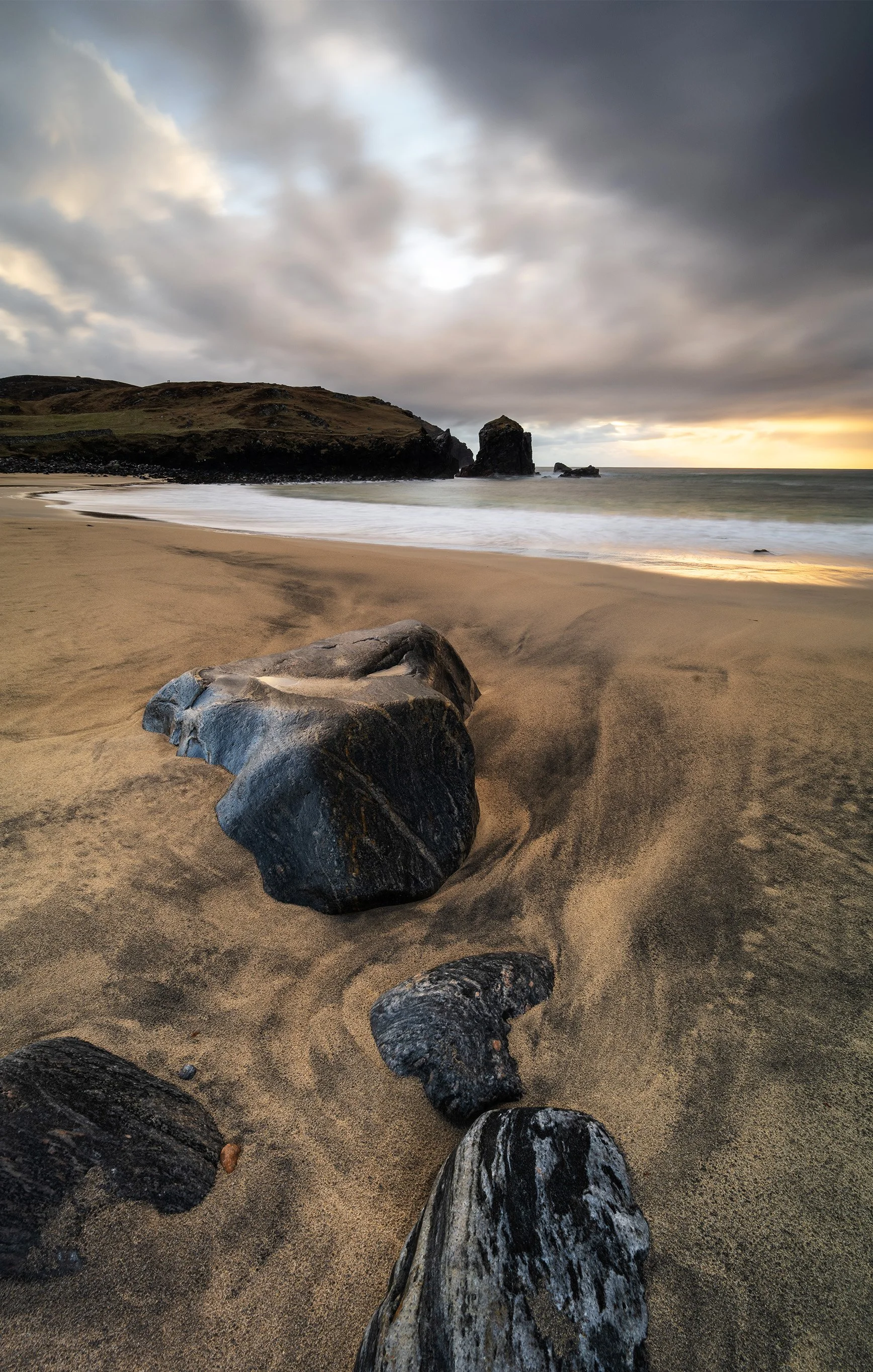
Dalbeg Beach, Isle of Lewis Outer Hebrdies
Dalbeg Beach Isle of Lewis Outer Hebrides
And last but by no means least, Dalbeg Beach, once again on the west coast of the Isle of Lewis, is a charming, sheltered little beach and an outstanding location for dramatic seascape photography.
My favourite time of year to photograph the beach here is from April through May, when the sunset lights up the ocean, sands and cliffs. I prefer shooting at low tide, it reveals expansive textures and reflections across the sand that really lift a composition. Gneiss boulders scattered along the shore add strong foreground interest and help lead the eye into the scene
After heavy rain, the river pours across the beach, carving spectacular channels that create dramatic leading lines and rich textures. These beautiful grooves guide the eye toward the sea and the sky, producing strong compositions. Use a low angle and a wide lens to emphasise the foreground channels; Shoot at golden hour or under moody skies to enhance contrast and bring out the sand’s patterns and wet reflections.
Taking a wander out onto the cliffs offers even more opportunities for photographing the beach and stacks from a fresh, elevated perspective.
Calm or stormy this beach makes an amazing location for photography
There are so so many other fantastic locations to photograph in the Outer Hebrides, Garry Beach, Scarista Beach, Dun Carloway Broch, Reef beach etc I could list them all as ideal places to visit during a trip to the Outer Hebrides but the blog post would be far too long….. For more locations and photographs visit our Gallery or Store Page.