How to Photograph Waves in the Outer Hebrides
How to Photograph Waves in the Outer Hebrides
Photographing waves in the Outer Hebrides is never the same twice. The Atlantic arrives with its own ideas, shaped by wind, tide and weather systems that move quickly across Harris and Lewis. Some days the sea is clean and glassy, with long, slow sets of waves rolling in from far offshore. Other days it’s wild especially when the storms move in, full of spray and shifting light. Working with these conditions is part of the challenge and for me what makes this type of photography exhillerating and exciting.
Why I’m Drawn to Photographing Waves
I’ve always been drawn to photographing waves, especially in storm conditions. There’s something about the way the Atlantic behaves when the weather turns, the weight of the swell, the speed of the wind, the sudden breaks of light that makes the whole coastline feel alive. Storm days are unpredictable. You’re responding to whatever the sea is doing in that moment, watching for shape, energy and those brief seconds where everything lines up. I love that each wave is different, through shape, texture and form and enjoy to see that raw power and energy of the ocean through my photography.
Here are a few things that help when photographing waves in the islands.
1. Watch the weather before you watch the sea
The Atlantic swell is only half the story. The real character of the waves comes from the weather sitting behind it.
Storm light gives deep greens and heavy contrast.
Clear, cold days bring clarity and detail.
Low, soft light creates quieter, more abstract shapes.
Checking the wind direction, swell period and cloud cover will also help plan before you head out. Apps that I use are Tide Times & Windy
2. Work with the wind, not against it
Wind direction changes everything.
Offshore winds (blowing from land to sea) hold the face of the wave up, creating clean lines and spray.
Onshore winds push the wave down, making it messy and harder to read.
If the wind is blowing towards the shore I tend to find that there is lots of white foam, you don’t tend to see the beautiful arc’s as the waves break, they push forward on themselves and I find this isn’t always the best. Instead, we head somewhere where we can use the wind as an advantage and see waves crashing over harbour walls & islands out to sea etc
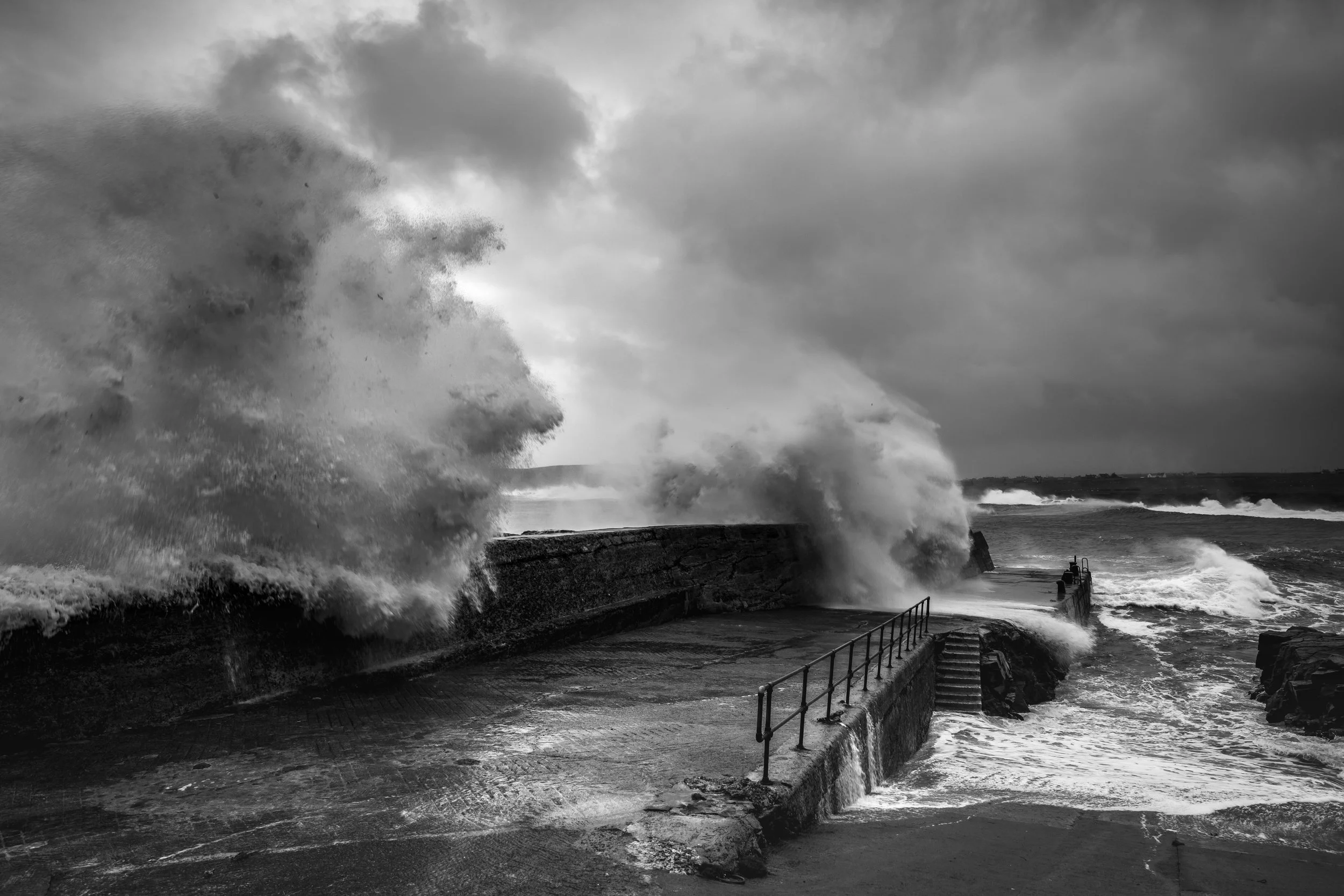
Port of Ness, Storm Wave Image
3. Choose your shutter speed for mood
There’s no single “correct” shutter speed for wave photography. It depends on what you want the water to feel like.
Fast (1/500 - 1/1000s and above): freezes spray, texture and impact. Using fast shutter speeds can also bring a trade off with other settings depending on the available light. It also depends on how rough/fast waves are breaking. I tend to use around 1/600’s to start with and adjust as needed.
Mid‑range (1/250s – 1/500s)
Slow (1/2s–2s): softens the wave into something more abstract.
The Outer Hebrides suits all three, the sea here has enough character to hold its shape even in longer exposures.
4. Look for structure, not just height
Big waves are dramatic, but the most interesting photographs often come from smaller, well‑formed sets. Look for:
backlit spray
translucent sections
repeating patterns
moments where the wave lifts and folds at the same time
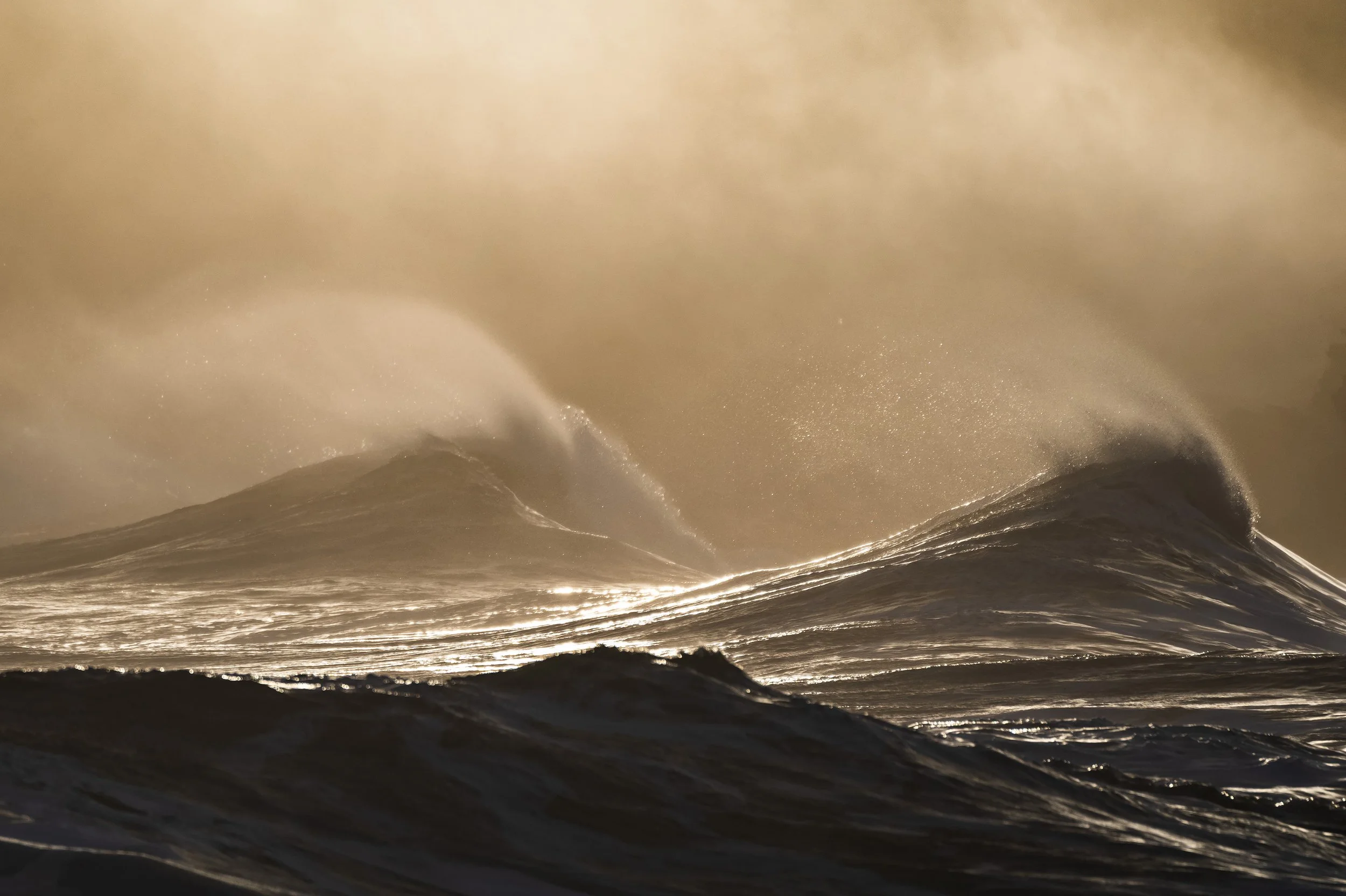
Morning sun illuminating the seavspray
5. Timing the Shot
Timing matters more than anything when photographing waves. Every set of waves has its own rhythm, and the best images often come from watching the sea for a while before lifting the camera. I look for the moment just before the wave folds, when the shape of the wave is clean and the energy is building. In storm conditions this becomes even more instinctive. The sea moves faster, the wind changes the shape of the spray, and you’re responding in real time. It’s a mix of patience and anticipation: waiting through the quieter lulls, reading the pattern of the sets, and pressing the shutter at the exact second the wave reveals its structure.
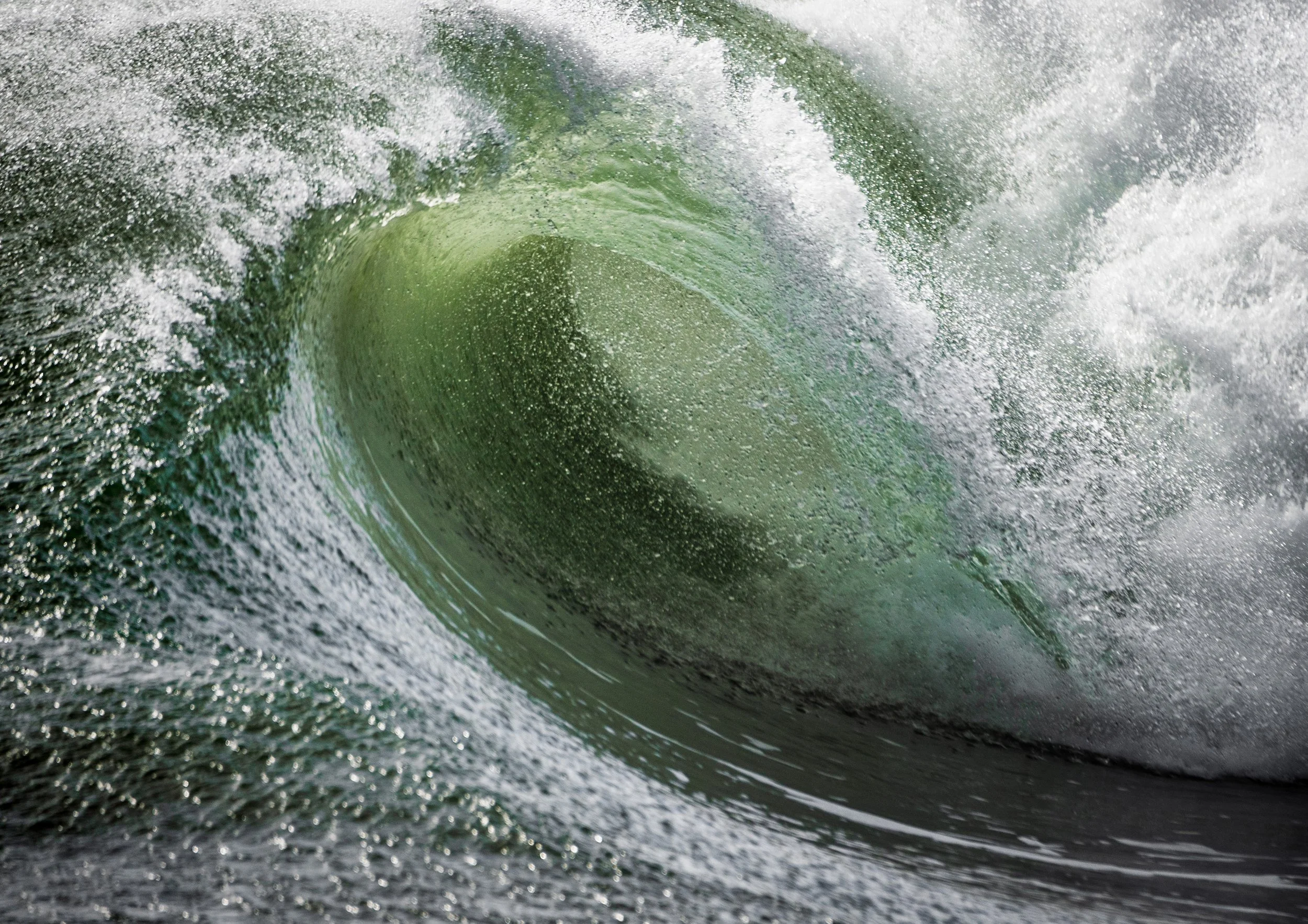
Close up detail of a breaking wave
6. Use the landscape to anchor the image
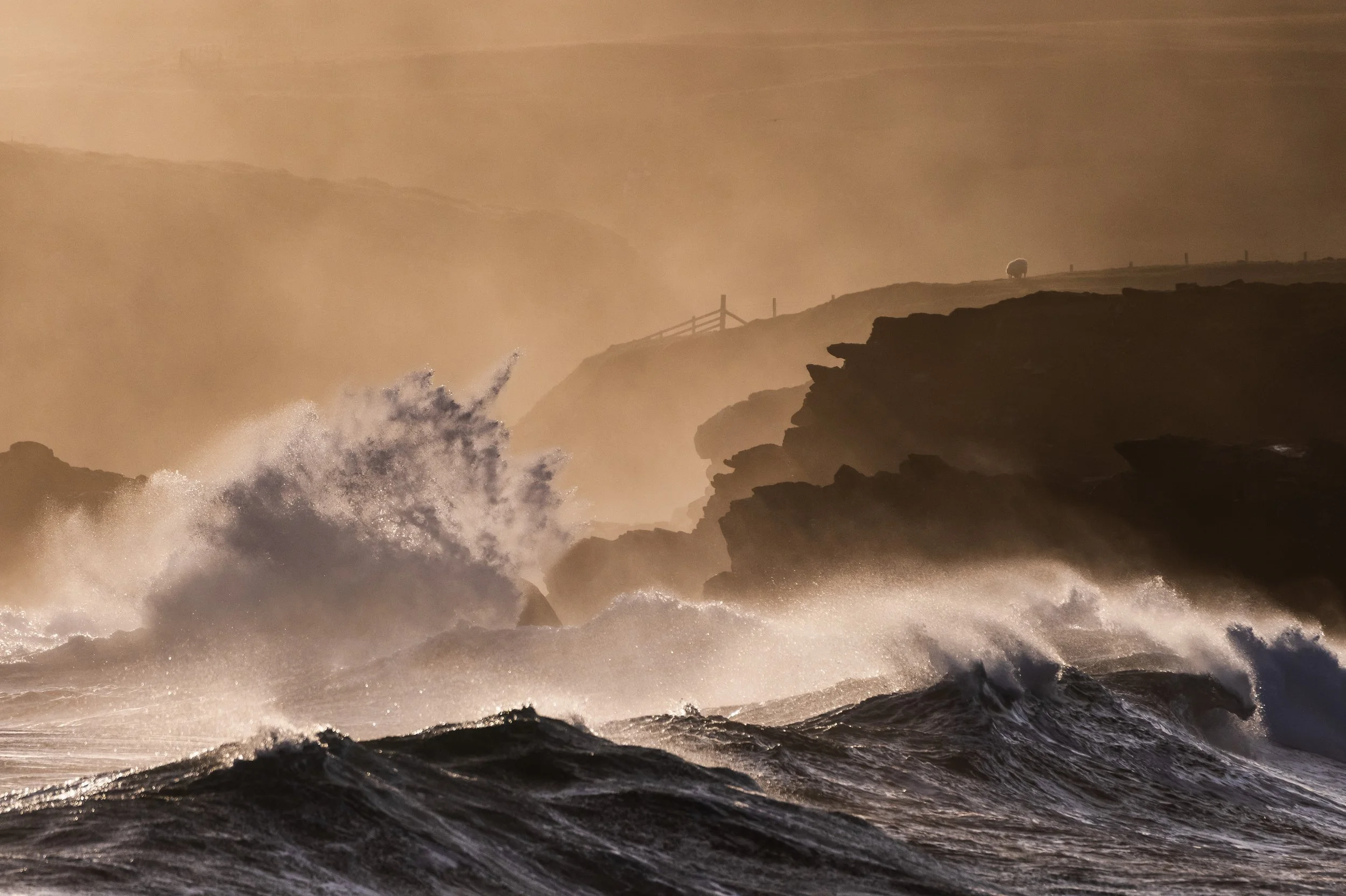
Waves are powerful on their own but placing them within the wider Hebridean landscape adds scale and context. Cliffs, headlands, distant islands and shifting weather fronts all help tell the story of where the wave belongs.
7. Stay patient and stay safe
The Atlantic can change quickly. Never turn your back on the sea and always give yourself more distance than you think you need. Never put yourself in an unsafe position, it’s best to use a telephoto lens. Some of the best images come from waiting through long lulls, watching the rhythm of the waves, and learning how the swell interacts with the coastline.
8. Embrace the weather
The Outer Hebrides is defined by weather, fast, dramatic, and often unpredictable. Instead of fighting it, use it. Rain, hail, sudden light breaks, shifting cloud, these are the moments that give wave photography here its character.
9. Looking after your kit
Photography in these types of conditions can be harsh, battling the winds, cold temperatures and endless sea spray can have an affect on your kit. Cameras and lenses are expensive and protecting them from the elements is important. I use a cover that protects both my camera & lens. It was extremely cheap to buy but does the job perfectly. Despite this, when I get home, I still clean everything down with a slightly damp cloth and then also use a Zeiss cleaning wipe, making sure everything is dry before packing away.
10. Final thoughts
Photographing waves in the Outer Hebrides is more about learning how the sea behaves in different moods, spending time with it is the best way to understand what the Atlantic is doing on any given day.
If you’d like to explore wave photography with us in person, we run 1;1 tuition and small workshops shaped around weather, tides and the changing light of the islands. If you are visiting the Island, you can find our storm wave images displayed in our gallery, 22 North Beach Stornoway.
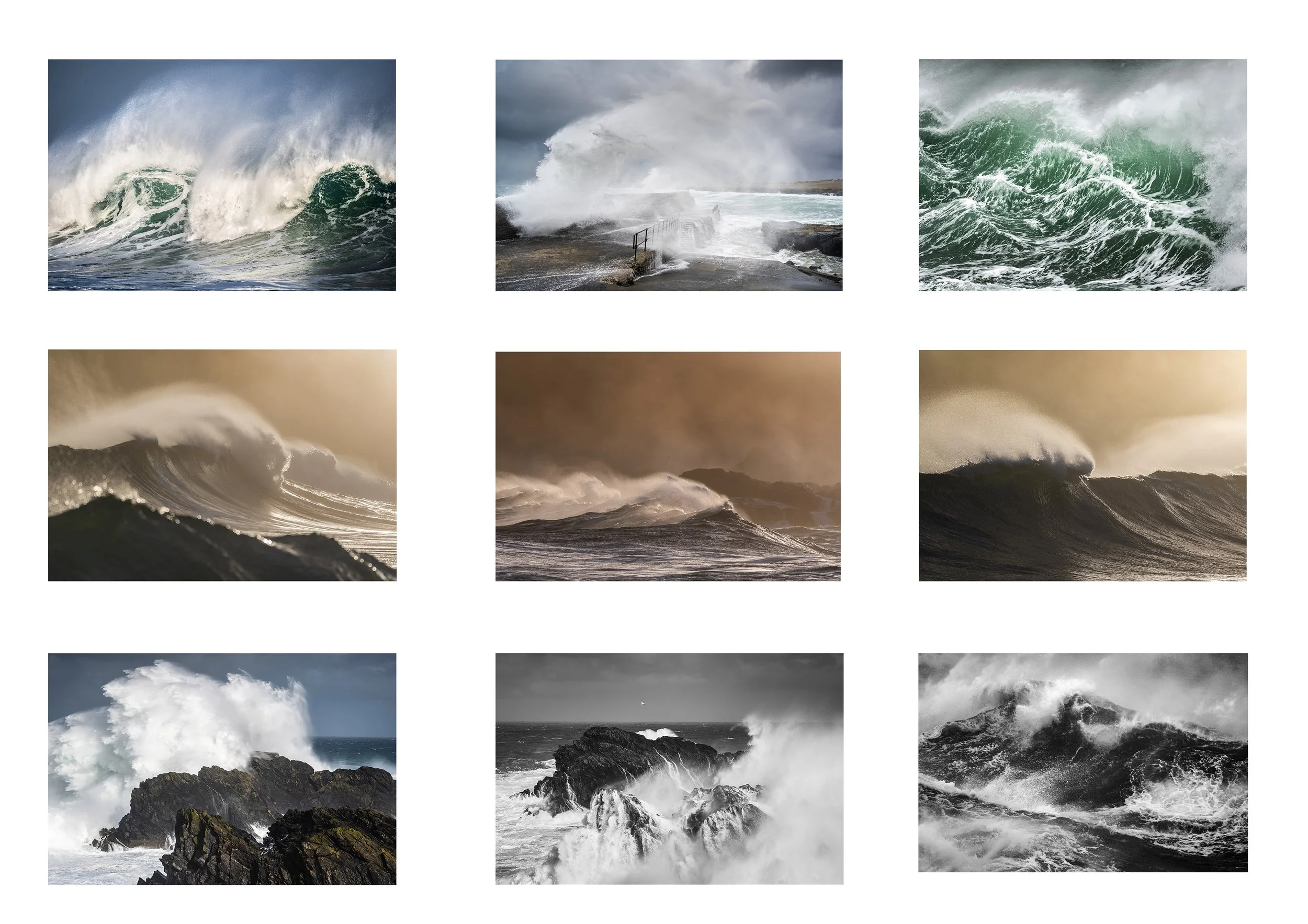
Selection of storm wave images, Outer Hebrides